

Vehicle Inspection and Brake Testing in a single package
In 2021 BAGMA completely revised their tractor and trailer brake testing training with the introduction of the Agricultural Tractor-Trailer Scheme (ATTS). Dr Andy Scarlett – BAGMA ATTS trainer – explains what’s new and the benefits the ATTS can offer both to dealers and their customers.
 Are your modern tractors and trailer pushing the (legal) limits?”
What is the ATTS?
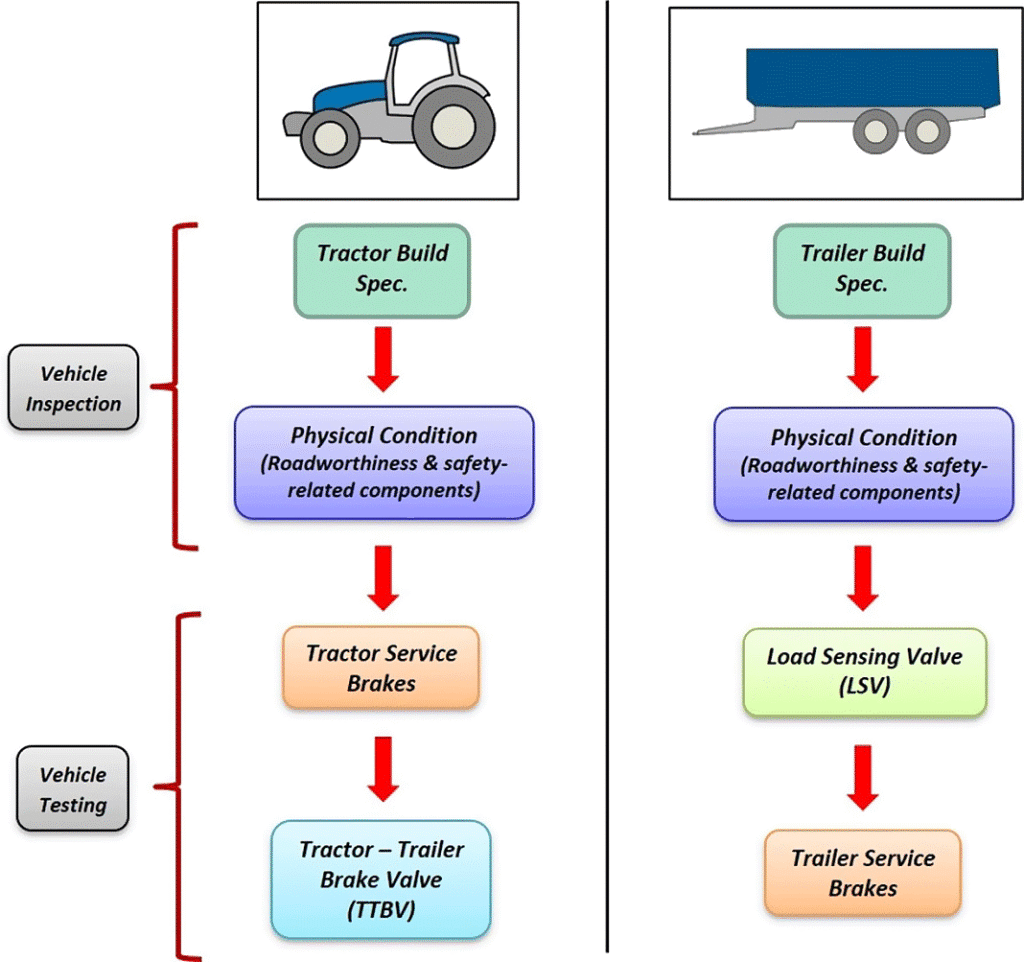
In a nutshell, it is vehicle roadworthiness inspection and brake testing combined in a single package. Using DVSA heavy goods vehicle (HGV) roadworthiness inspection criteria as a starting point, BAGMA engineers have developed dedicated inspection procedures to suit agricultural vehicles. This is combined with (tractor or trailer/trailed implement) brake testing to provide a complete roadworthiness assessment package.
What vehicles does the ATTS cover?
Mainly tractors, trailers and trailed implements as well as most self-propelled agricultural vehicles (e.g. telehandlers, self-propelled sprayers and utility vehicles). The ATTS includes specific inspection and testing activities tailored to suit different vehicle types.
Why bother with ATTS Inspection and Testing?
Agricultural vehicles do not legally require roadworthiness (MOT) inspections, BUT if used on-road, they must be maintained in fully roadworthy condition at all times. If stopped by a DVSA or Police roadside check, the roadworthiness criteria an agricultural vehicle must satisfy is exactly the same as if it was in a MOT test bay.
Current road regulations may be out-dated and don’t accommodate modern tractors and trailers. Tractors can now travel faster on-road and the trailers towed are larger and heavier. On-road usage is also often more intense. The world has moved on, GB vehicle legislation has not, BUT that’s no excuse for an unroadworthy vehicle.
No responsible agricultural vehicle user wants to operate outside of the law. If we want regulatory change, to allow legal operation of larger/heavier and faster vehicles, then the agricultural sector must demonstrate professionalism. Highlighting the roadworthiness of the larger, heavier and faster vehicles we now sell and operate is an essential step.
How can the ATTS help?
ATTS inspection and testing is intended to complement regular on-farm vehicle maintenance and checks, not be a substitute for them. ATTS inspection and testing will highlight any vehicle roadworthiness or safety issues which need to be addressed, either by the operator or the dealer. Once these are corrected (and the vehicle re-tested), the ATTS can provide documentary evidence that the vehicle has met statutory roadworthiness requirements.
Why is ATTS training a Two-Day Course?
We know that Dealership technician time is money and it isn’t earned while attending training courses. However, the ATTS training is both complex and in-depth. It includes knowledge of regulations, vehicle inspection procedures and defect categorisation: braking system operation and performance testing. It even includes a written exam for each attendee. ATTS-trained technicians are required to inspect and assess safety-critical vehicle systems. The training has to be thorough ….. and I’m afraid that takes time.
Contact BAGMA at info@bagma.com for more information
