
In response to the agricultural sector’s progression towards electrification, SPAL has extended its range of high-performance axial fans and centrifugal blowers to include a series of products to maximise thermal management and energy efficiency in these demanding applications.
The first is a new range of brushless drive High Voltage fans for cooling in vehicles powered by high-capacity batteries. HV fans require less current to achieve the same power output as low voltage fans along with lower energy loss; making them more energy-efficient while extending the range or the time the machine can function on a single charge.
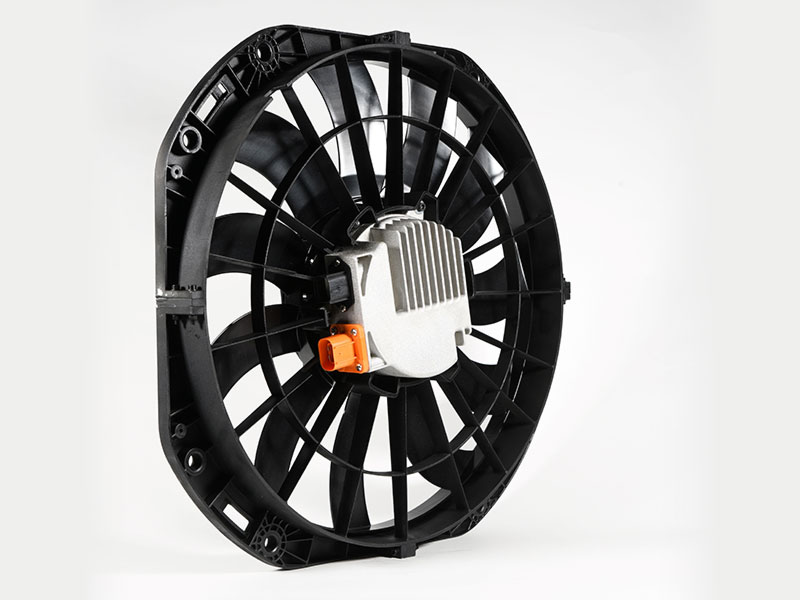
The second product for optimum battery and fuel cell thermal management is a brushless drive water pump. Currently available in 12V and 24V, and shortly in 48V, the pump is designed to introduce further thermal efficiency into the system as it has the facility to allow additional control of the coolant rate to manage and maintain what is a narrow temperature range. This enables the pump to ensure maximum battery thermal protection and therefore overall performance.
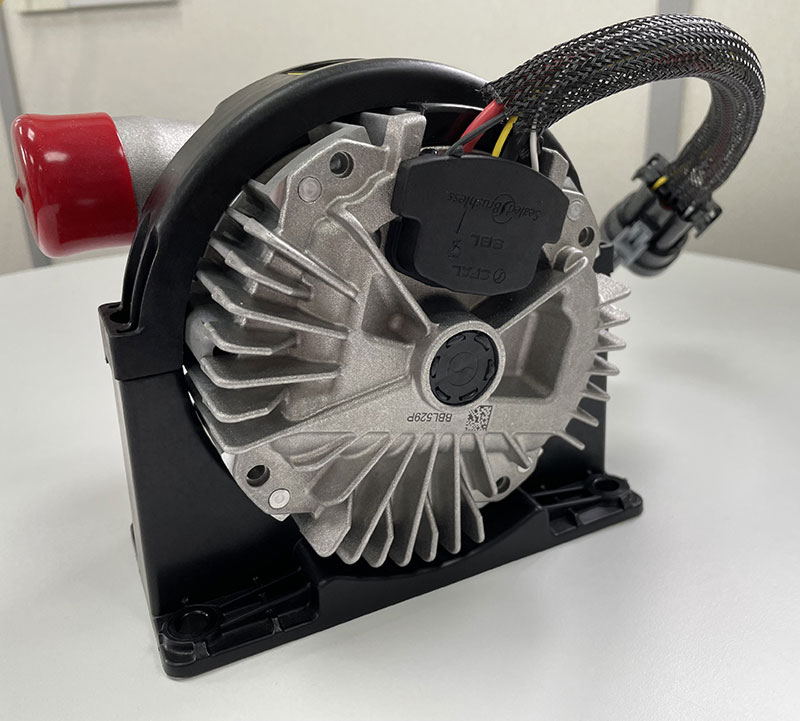
SPAL’s brushless products are equipped with fully sealed drive units meeting IP6K9K specifications, with a metal housing resistant to corrosion and water ingress. Smart controlled, with CAN, PWM and LIN versions available as well as an HVIL option; the built-in diagnostic and safety features enable the fans and pumps to maintain performance in challenging environmental conditions, while delivering up to 40,000 hours of operation.
For applications in the wider agricultural arena, SPAL products are increasingly being recognised for their effectiveness in cooling stationary applications such as battery energy storage systems (BESS) particularly when co-located with onsite solar and wind power generation.
SPAL fans can even be found employed in the thermal management of wind turbines where friction, moving parts, and high-power electronics generate significant heat that needs to be controlled to optimise performance, ensure reliability and extend operating lifespan.
